Understanding Recessional Velocity: A Key Concept in Astronomy
Astronomers have long been fascinated by the movement of galaxies and the expansion of the universe, with recessional velocity playing a crucial role in our understanding of these phenomena. Recessional velocity refers to the speed at which galaxies are moving away from each other, and it is a fundamental concept in the field of cosmology. By studying recessional velocity, scientists can gain insights into the structure and evolution of the universe, and shed light on the mysteries of dark energy and dark matter.
What is Recessional Velocity?
Recessional velocity is a measure of the speed at which a galaxy is moving away from us, and it is typically measured in kilometers per second. The concept of recessional velocity is based on the observation that the light coming from distant galaxies is shifted towards the red end of the spectrum, a phenomenon known as redshift. This redshift is a result of the galaxy's motion away from us, and by measuring the amount of redshift, astronomers can calculate the recessional velocity of the galaxy. 
Common Mistakes in Understanding Recessional Velocity
One common mistake in understanding recessional velocity is to assume that it is a measure of the speed at which a galaxy is moving through space. However, recessional velocity is actually a measure of the speed at which the distance between two galaxies is increasing. This is an important distinction, as it highlights the fact that the expansion of the universe is not a movement of galaxies through space, but rather a stretching of the fabric of space itself. Another mistake is to assume that recessional velocity is constant, when in fact it can vary depending on the location and distance of the galaxy.
Smarter Alternatives for Calculating Recessional Velocity
In recent years, astronomers have developed new methods for calculating recessional velocity, which take into account the complexities of the universe and the varying rates of expansion. One such method is the use of type Ia supernovae, which are incredibly bright explosions that occur when a white dwarf star accretes material from a companion star. By studying the light curves of these supernovae, scientists can determine the distance to the galaxy and calculate its recessional velocity. Another method is the use of baryon acoustic oscillations, which are fluctuations in the density of galaxies that can be used to measure the expansion history of the universe.
Implications of Recessional Velocity
The study of recessional velocity has far-reaching implications for our understanding of the universe. By measuring the recessional velocity of galaxies, scientists can gain insights into the properties of dark energy, which is thought to be driving the acceleration of the universe's expansion. Additionally, the study of recessional velocity can help us understand the formation and evolution of galaxy clusters, which are the largest structures in the universe. Ultimately, the study of recessional velocity is an important part of the ongoing effort to understand the mysteries of the cosmos and to shed light on the fundamental laws of physics that govern the universe.
In conclusion, recessional velocity is a fundamental concept in astronomy that plays a crucial role in our understanding of the universe. By studying recessional velocity, scientists can gain insights into the structure and evolution of the universe, and shed light on the mysteries of dark energy and dark matter. As our understanding of the universe continues to evolve, the study of recessional velocity will remain an important area of research, with implications for our understanding of the cosmos and the laws of physics that govern it.
Solved For A Galaxy Whose Recessional Velocity Vr = 30,000 | Chegg.com
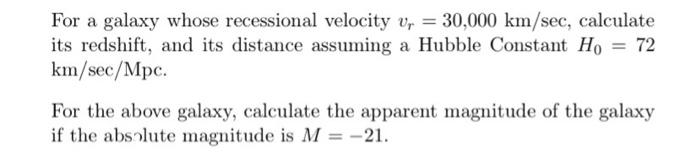
Solved For a galaxy whose recessional velocity Vr = 30,000 | Chegg.com
Recessional Velocity Of Galaxy. We Stated In Chap. 10 That Red-shift
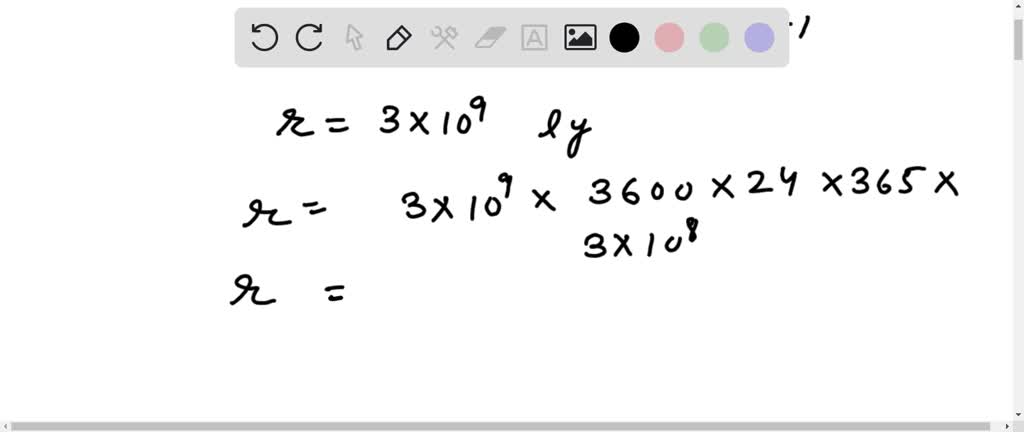
Recessional velocity of galaxy. We stated in Chap. 10 that red-shift ...
Solved Which Of These Graphs Correctly Reflects The | Chegg.com
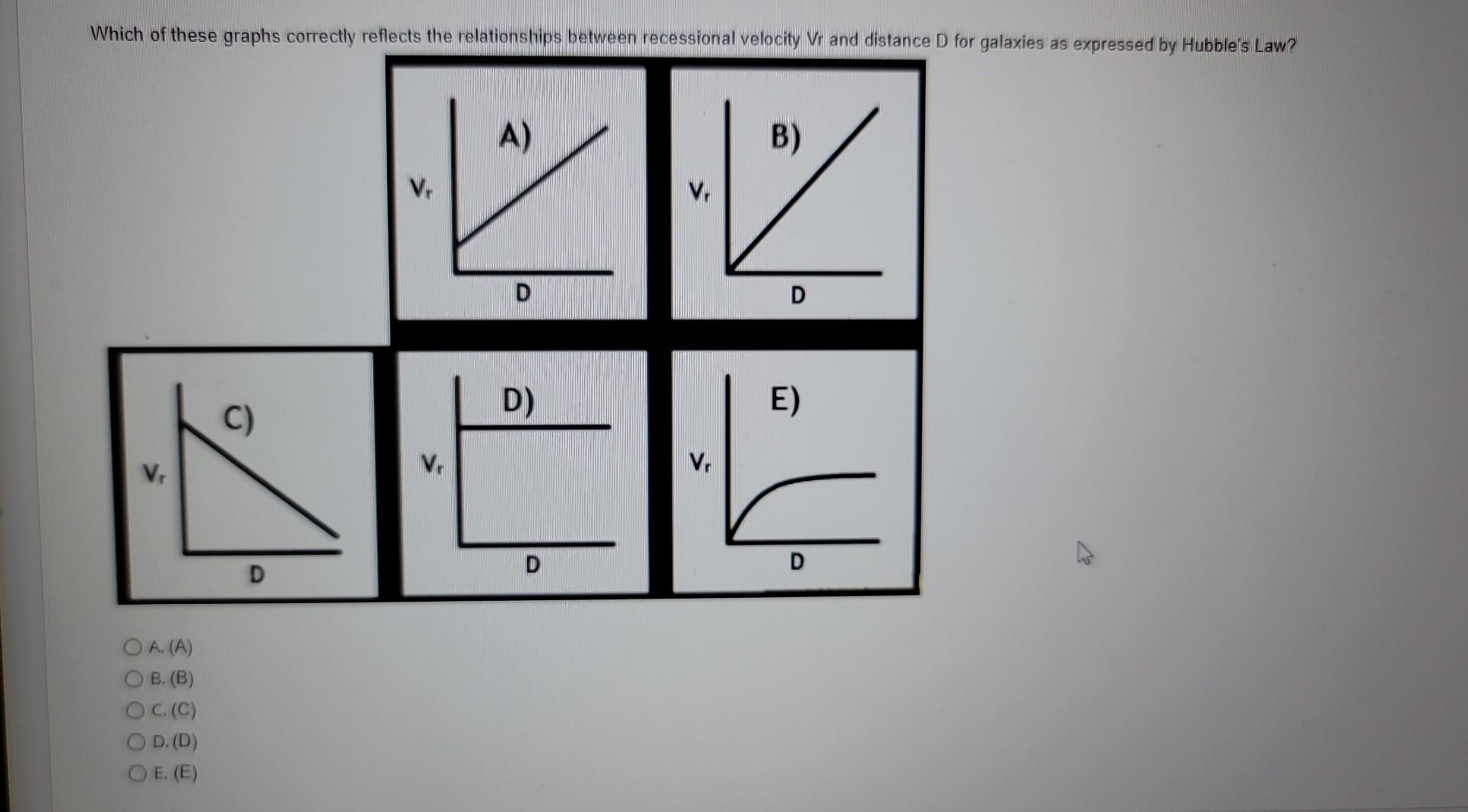
Solved Which of these graphs correctly reflects the | Chegg.com